Created with AIPRM Prompt “Human Written |100% Unique |SEO Optimised Article”
Your Complete Real Estate Services Guide: Expert Solutions for Every Property Need
Article Outline
H1: Your Complete Real Estate Services Guide: Expert Solutions for Every Property Need
H2: What Are Real Estate Services?
H3: Why Professional Property Guidance Matters
H2: Residential Real Estate Services
H3: Home Buying Services
H4: Property Search and Shortlisting
H3: Home Selling Services
H2: Rental and Leasing Services
H3: Services for Landlords and Tenants
H2: Commercial Real Estate Services
H3: Office, Retail, and Industrial Properties
H2: Property Valuation and Market Analysis
H2: Real Estate Investment Advisory
H3: Building a Smarter Property Portfolio
H2: Property Management Services
H2: Legal, Documentation, and Due-Diligence Support
H2: Luxury Real Estate Services
H2: How Technology Is Transforming Real Estate Services
H2: How to Choose the Right Real Estate Service Provider
H2: Conclusion
H2: Frequently Asked Questions
What Are Real Estate Services?
Real estate services cover the professional assistance people receive when they buy, sell, rent, lease, manage, develop, or invest in property. A property transaction can look simple from the outside: find a property, agree on a price, sign paperwork, and move in. In reality, every stage can involve research, negotiations, documentation, financing, inspections, market analysis, and regulatory considerations. That is why a professional real estate service provider can function like a guide through a complicated journey rather than simply acting as someone who shows properties. Modern professionals increasingly work across several specialties, including residential brokerage, commercial brokerage, relocation, property management, land development, and homeownership consulting. (National Association of REALTORS®)
The right service depends heavily on your objective. A first-time homebuyer may need help understanding neighborhoods, comparing properties, negotiating an offer, and navigating the transaction. A landlord may be more interested in tenant screening, rent collection, maintenance coordination, and lease administration. Meanwhile, an investor could need market research, property valuation, investment analysis, and portfolio planning. The important point is that real estate services are not one-size-fits-all. Your goals, budget, property type, location, timeline, and risk tolerance should determine the professional support you choose.
Why Professional Property Guidance Matters
Property decisions can involve substantial amounts of money, which means small mistakes can have long-lasting consequences. A property that looks attractive in an online listing might have documentation issues, unrealistic pricing, maintenance concerns, location disadvantages, or other factors that are not obvious from photographs. In India, for example, property transactions can involve state-specific rules around registration, stamp duty, tenancy, and regulatory requirements, making local professional advice particularly valuable. (legalanswers.in)
Professional guidance also provides a second perspective. When you fall in love with a home, it is easy to focus on the beautiful kitchen, balcony, location, or interior design and overlook practical questions. An experienced professional can encourage you to examine comparable properties, transaction terms, documentation, market conditions, and potential costs before committing. Think of it like buying a car: you would not judge the entire vehicle only by its paintwork, so why judge a property only by its appearance?
Residential Real Estate Services
Residential real estate services focus primarily on homes and living spaces, including apartments, independent houses, villas, townhouses, and other residential properties. These services can support buyers, sellers, landlords, tenants, and investors throughout different stages of the property journey. The process often starts with understanding the client’s requirements and ends with completing the transaction or establishing a successful rental arrangement.
For buyers, the process can include identifying suitable properties, arranging viewings, comparing alternatives, negotiating terms, and coordinating with relevant professionals. For sellers, services can include pricing strategy, marketing, buyer qualification, negotiations, and transaction coordination. The best approach is not simply to find a property quickly but to create a structured process that reduces avoidable mistakes.
Home Buying Services
Buying a home involves much more than browsing property listings. A good home buying service begins by defining what the buyer actually needs: location, property type, size, budget, accessibility, amenities, future plans, and preferred timeline. Once those requirements are clear, professionals can help narrow down the market and identify properties worth serious consideration.
The next stage involves evaluating the shortlisted properties. Buyers should consider the property’s condition, neighborhood, access to essential services, potential resale appeal, ongoing costs, and documentation. Financing can also influence the decision significantly. In markets where buyers need mortgages, understanding affordability and available financing structures before making an offer can prevent unpleasant surprises later.
Real estate professionals can also help coordinate communication between buyers, sellers, lenders, legal professionals, inspectors, and other parties. Depending on the jurisdiction and professional relationship, the duties of an agent can vary considerably. For example, agency relationships and compensation arrangements can differ according to applicable law and written agreements. (National Association of REALTORS®)
Property Search and Shortlisting
Property search is where professional expertise can save considerable time. Instead of reviewing hundreds of listings without a clear strategy, a buyer can establish specific criteria and compare a smaller group of relevant options. A strong shortlist should consider not only asking price but also location, property condition, recurring costs, potential risks, and suitability for the buyer’s long-term plans.
A useful comparison might look like this:
| Factor | What to Evaluate |
|---|---|
| Location | Connectivity, services, neighborhood quality |
| Price | Asking price versus comparable properties |
| Condition | Age, repairs, construction quality |
| Documentation | Ownership and required legal records |
| Costs | Taxes, maintenance, utilities, registration |
| Future potential | Resale, rental demand, development |
| Lifestyle | Schools, workplaces, transport, amenities |
The goal is to turn property hunting from an emotional search into an informed decision-making process.
Home Selling Services
Selling a property requires a different strategy. The first question is usually how much should the property be marketed for? Pricing too high can reduce interest and cause the listing to sit on the market, while pricing too low can leave money on the table. A professional market analysis can help establish a realistic pricing range by considering comparable properties, location, condition, demand, and current market conditions.
Marketing is another major component. High-quality photography, accurate descriptions, digital listings, targeted promotion, and well-organized property viewings can help a property reach appropriate buyers. Technology now plays an important role in this process, with real estate professionals commonly using digital transaction management, electronic signatures, CRM systems, MLS software, and social media. (National Association of REALTORS®)
Negotiation then becomes the bridge between interest and a completed transaction. The strongest offer is not always the one with the highest headline price. Financing conditions, timelines, contingencies, closing requirements, and the buyer’s ability to complete the transaction can all matter. A seller-focused professional can help compare the full terms instead of focusing on one number.
Rental and Leasing Services
Rental and leasing services connect property owners with tenants while helping both sides establish clear expectations. For landlords, the service may include marketing the property, handling inquiries, coordinating viewings, evaluating prospective tenants, preparing lease documentation, and managing ongoing communication. For tenants, professional assistance can make it easier to compare properties and understand important lease conditions before committing.
Rental arrangements should always be approached carefully because a lease is more than a monthly payment. Tenants should understand the duration of the agreement, deposit requirements, maintenance responsibilities, notice provisions, permitted uses, and other applicable terms. Landlords, meanwhile, need processes that help them manage the property responsibly while respecting tenant rights and applicable laws.
Services for Landlords and Tenants
For landlords, professional property services can reduce the administrative burden associated with rental ownership. A property manager may coordinate maintenance requests, communicate with tenants, organize inspections, and keep track of rent-related administration. The exact scope depends on the management agreement.
Tenants can also benefit from professional guidance when searching for a suitable rental. Instead of focusing solely on monthly rent, they can compare commute times, neighborhood facilities, building condition, lease terms, and additional expenses. The best rental decision is one that works financially and practically over the entire lease period.
Commercial Real Estate Services
Commercial real estate services address properties used for business purposes, including offices, retail spaces, warehouses, industrial facilities, hospitality properties, and other specialized assets. Commercial transactions can be considerably more complex than ordinary residential deals because factors such as business operations, lease structures, zoning, location economics, tenant requirements, and property income can influence value.
A business looking for office space, for example, should not select a property solely because the building looks impressive. It needs to consider employee accessibility, customer access, parking, operating costs, nearby competition, expansion possibilities, and lease terms. A retailer may care deeply about visibility and foot traffic, while an industrial user may prioritize logistics, loading access, infrastructure, and proximity to transportation networks.
Office, Retail, and Industrial Properties
Each commercial property category requires a different evaluation approach. Office real estate can revolve around workforce accessibility, building amenities, technology infrastructure, and flexibility. Retail property often depends heavily on visibility, customer demographics, accessibility, and surrounding commercial activity. Industrial property can require attention to logistics, storage requirements, loading facilities, transport connections, and operational suitability.
Because commercial property decisions can influence a company’s operating costs for years, professional analysis can be especially valuable. Commercial real estate specialists may help with site selection, negotiations, leasing strategies, investment analysis, and transaction coordination.
Property Valuation and Market Analysis
Understanding what a property is worth is one of the most important parts of real estate. Property valuation involves analyzing factors that influence a property’s market value rather than simply accepting the seller’s asking price. Comparable properties, location, physical characteristics, demand, income potential, and broader market conditions can all contribute to an informed assessment.
For homeowners, valuation can help establish an appropriate selling strategy. For buyers, it can provide context when deciding whether an asking price appears reasonable. For investors, valuation can become even more important because the property’s purchase price needs to be considered alongside expected income, expenses, financing, and future potential.
A valuation should not be treated as an automatic guarantee of future performance. Markets change, neighborhoods evolve, and economic conditions can shift. Instead, it should be viewed as one piece of a broader decision-making framework.
Real Estate Investment Advisory
Real estate investment advisory is designed for people who view property as an investment rather than simply a place to live. Investors may be interested in rental income, long-term appreciation, diversification, commercial opportunities, redevelopment, or other strategies. Each objective requires different analysis.
A good investment decision begins with the numbers. Investors should examine purchase price, financing costs, expected rental income, operating expenses, taxes, maintenance, vacancy assumptions, transaction costs, and potential exit value. It is also important to think about liquidity. Property can be a valuable asset, but it generally cannot be sold as quickly as cash or publicly traded securities.
Building a Smarter Property Portfolio
Portfolio thinking changes the question from “Is this property good?” to “Does this property make sense within my overall plan?” Someone who already owns several properties in the same area, for example, may need to think about concentration risk. Another investor may prioritize properties that generate rental income, while someone else may have a longer-term appreciation strategy.
Professional advisors can help organize these considerations, but investors should still understand the assumptions behind any recommendation. Real estate decisions involve risks, and no professional can guarantee returns. The strongest advisory relationship is based on transparency, clear documentation, realistic expectations, and an understanding of the client’s objectives.
Property Management Services
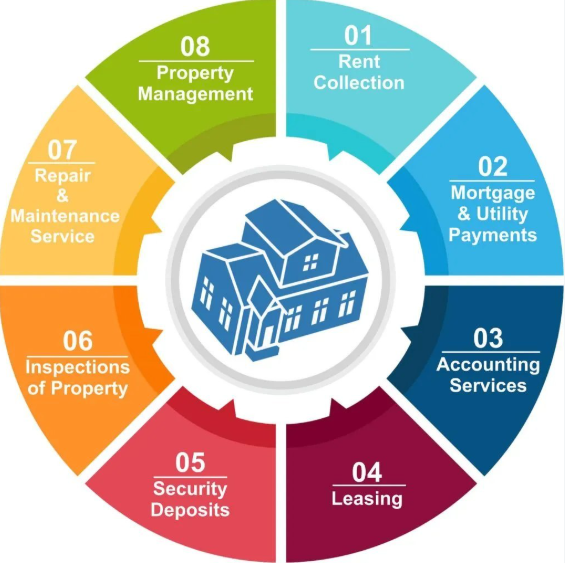
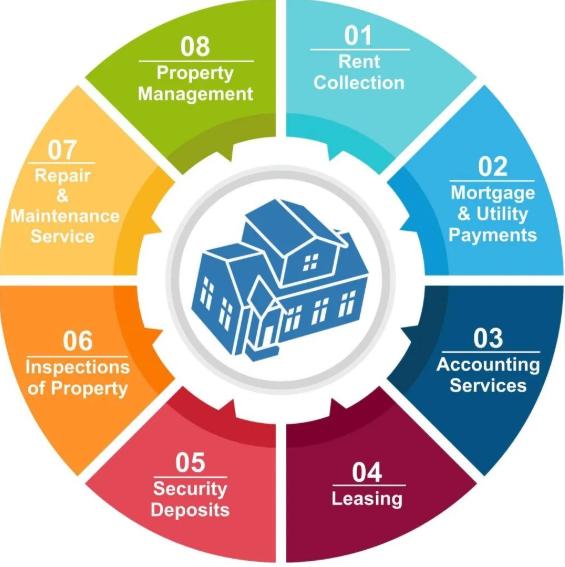
Property management is one of the most practical areas of real estate services. Owners who live far from their properties, have multiple units, or simply do not want to manage day-to-day responsibilities may hire professional managers to handle operational tasks.
Services can include tenant communication, maintenance coordination, rent administration, inspections, vendor management, and reporting. The objective is to preserve the property’s condition while maintaining an efficient relationship with occupants.
Professional property management can be particularly useful for owners who want a more hands-off experience. However, owners should carefully review the management agreement, including the services provided, fees, responsibilities, communication procedures, and circumstances that may generate additional charges.
Legal, Documentation, and Due-Diligence Support
Real estate transactions depend heavily on documentation. Ownership records, agreements, approvals, disclosures, financing documents, registration requirements, and other paperwork can all influence the transaction. Professional real estate services may coordinate with lawyers and other qualified specialists, but clients should understand the difference between real estate guidance and formal legal advice.
Due diligence is especially important. A property can appear perfect while unresolved issues remain hidden beneath the surface. Depending on the location and property type, due diligence may involve checking ownership, encumbrances, approvals, construction status, taxes, physical condition, lease obligations, and applicable regulatory requirements.
In India, property buyers should pay particular attention to state-specific procedures and applicable regulatory frameworks because requirements can vary by jurisdiction. (legalanswers.in)
The safest approach is to avoid rushing simply because a property seems attractive. A few extra days spent verifying important information can be far less costly than discovering a major problem after the transaction has been completed.
Luxury Real Estate Services
Luxury real estate services are designed around high-value residential and commercial properties where clients may expect a more personalized experience. Luxury transactions can involve distinctive architecture, premium locations, extensive amenities, privacy requirements, complex negotiations, and specialized marketing.
The service experience often emphasizes discretion, tailored property searches, professional presentation, private viewings, and detailed market analysis. However, luxury branding should never replace due diligence. A beautiful property still needs appropriate documentation, realistic valuation, and careful transaction planning.
For sellers, luxury marketing may require more targeted positioning rather than simply putting a property on every available listing platform. For buyers, the focus may be on finding properties that match highly specific lifestyle or investment requirements.
How Technology Is Transforming Real Estate Services
Technology has changed the way people discover, evaluate, market, and transact in property. Digital listings allow buyers to research properties before visiting them. Virtual tours and video walkthroughs can help narrow down options. Electronic signatures and digital transaction-management systems can reduce administrative friction.
Real estate professionals are also using CRM systems and social platforms to maintain relationships and generate leads. NAR’s 2026 member profile specifically reports widespread use of digital transaction tools, e-signatures, CRM systems, MLS software, and social media among professionals. (National Association of REALTORS®)
Artificial intelligence is also becoming increasingly relevant for tasks such as organizing property information, generating marketing drafts, analyzing large datasets, and improving customer communication. Yet technology should support professional judgment rather than replace it. A computer can compare thousands of data points, but a human still needs to determine whether a particular property genuinely fits a client’s priorities.
How to Choose the Right Real Estate Service Provider
Choosing a real estate professional deserves the same care as choosing the property itself. Start by identifying exactly what you need. Are you buying, selling, renting, investing, or managing a property? Do you need residential assistance, commercial expertise, luxury services, or investment advice? The clearer your objective, the easier it becomes to find someone with the appropriate specialization.
Experience in the relevant market is another important consideration. A professional who understands one neighborhood extremely well may provide more useful guidance than someone who claims to cover an enormous territory without meaningful local knowledge. Ask about their process, communication style, services, fees, and experience with properties similar to yours.
Transparency should also be non-negotiable. Compensation arrangements and professional relationships should be explained clearly before you commit. In the U.S., for example, NAR’s current standards emphasize disclosure and informed consent in certain compensation and representation situations, while specific legal requirements vary by jurisdiction. (National Association of REALTORS®)
A useful selection checklist includes:
Relevant experience: Do they regularly handle your type of property?
Local knowledge: Do they understand the market where you are buying or selling?
Communication: Will they provide timely and clear updates?
Transparency: Are fees and responsibilities explained in writing?
Professional network: Can they coordinate with appropriate legal, financial, inspection, or maintenance professionals?
References: Can they demonstrate a history of serving clients effectively?
The goal is not to find the person who makes the biggest promises. It is to find the professional who gives you the clearest information and helps you make decisions with realistic expectations.
Conclusion
Real estate is much more than buying and selling buildings. It is an ecosystem of services covering property search, sales, rentals, leasing, valuation, investment, management, commercial real estate, luxury property, marketing, and transaction support. The right service can make a complicated property journey more organized, transparent, and manageable.
Today’s market also demonstrates why adaptability matters. Real estate professionals are increasingly combining traditional expertise with technology, specialized services, data, and diversified business models. (National Association of REALTORS®)
Whether you are purchasing your first home, selling an existing property, searching for commercial space, managing rentals, or building a portfolio, start with your objective. Then choose professional support that matches your specific needs. Property decisions can have long-term financial consequences, so informed research, careful due diligence, transparent communication, and qualified professional advice should always be part of the process.
Frequently Asked Questions
1. What are the main types of real estate services?
The main categories include buying and selling services, rental and leasing services, property management, commercial real estate, valuation, investment advisory, luxury property services, and transaction coordination. The exact services available vary by professional and location.
2. Do I need a real estate professional to buy a property?
Not necessarily, but professional guidance can be useful for navigating property searches, negotiations, documentation, and transaction processes. The need for professional assistance depends on your experience, the complexity of the transaction, and local requirements.
3. What does a property manager typically do?
A property manager may handle tenant communication, rent administration, maintenance coordination, inspections, vendor relationships, and other operational responsibilities. The exact duties depend on the management agreement.
4. How can I choose a good real estate service provider?
Look for relevant experience, local market knowledge, clear communication, transparent fees, appropriate credentials, and a professional process. Ask questions before signing an agreement and make sure you understand exactly what services are included.
5. Why is due diligence important when buying property?
Due diligence helps identify potential issues involving ownership, documentation, approvals, physical condition, costs, and other aspects of the property. It can reduce the risk of making a costly decision based only on the property’s appearance or marketing.
🔍 Want to find the best keywords and rank this article faster? Try the #1 SEO & AI visibility toolkit free for 14 Days . Track your keyword rankings, audit your site, and monitor your AI search visibility on ChatGPT, Gemini & Google AI Overviews
✨ Get better articles, faster. This prompt is powerful. But Pro Article Writer takes it further — AI humanizer, SEO tools, full editor, one-click options, and more control all in one place. Try it free →
If this prompt helped you, please leave a review — it keeps this prompt ranked #1.